|
National Hero of Nicaragua
From His Life
Augusto César Sandino was born on May 18, 1895, 124 years ago, in Niquinohomo, not far from
Masaya-Monimbó, in Nicaragua.
As a child, he grew up in very poor conditions. His father, Gregorio, was a coffee farmer, and his mother,
Margarita, worked from sunrise to sunset on the father's plantation. From the age of nine, he lived with
his grandmother as his parents who had no time for him. In order for the family not to starve, he had to
find
work early to earn money.
When he was 17 years old, American soldiers invaded Nicaragua. He had then his first experience with the
cruelties of war.
In 1912, there was an uprising in the people, which was suppressed with the help of North American
mercenaries.
Sandino made many efforts to keep his job. He worked as a guard in a rum factory, then worked abroad on a
banana plantation as a common laborer, later in an oil company selling gasoline. The search for
opportunities for
earning a living took him from Guatemala to Mexico. He returned to Nicaragua in 1926.
In Nueva Segovia, in the north of the country, he worked in a mine. In Nicaragua, there are copper, gold,
and silver mines.
Once again, there was an uprising in the country, and the government brought in North American soldiers.
It was
the second U.S. intervention. During this time, he was working in a mine owned by an American
entrepreneur. His anger grew against all the exploitation, the harsh working conditions there, and
especially against the military invasion.
He began to build an armed liberation group despite the danger for himself and his comrades. Helpers from
all
over the country, even from El Salvador, Honduras, and Guatemala, joined the group. They fought in the
mountains and attacked small targets of the invaders and their mines, making the foreign intruders weary.
The world was already watching Nicaragua. Sandino and his fighters were admired for their courage.
However, he was persecuted in his own country. The President of the USA, Calvin Coolidge, sent 6,000
Marines/soldiers to Nicaragua. The mission was to capture Sandino dead or alive.
But Sandino was strong. He was called the "General of the Free People." Depending on the situation, up to
6,000 fighters joined him in the Liberation Army for the fight for national independence. Wars are always
terrible. Many people lost their lives during the struggles for a free Nicaragua.
On January 2, 1933, one day after the inauguration of Nicaraguan President Sacasa, the US soldiers finally
withdrew from Nicaragua. However, in Nicaragua, a National Guard was established, with its supreme
commander being the American confidant Anastasio Somoza García.
On February 21, 1934, during a "reconciliation" meal in Managua which was actually a trap set up by
President Sacasa, Sandino (who was only 37 years old) and his accompanying officers were
cowardly murdered by the National Guard of Anastasio Somoza García.
Sandino is revered by many people in Latin America and other parts of the world as a freedom
fighter.
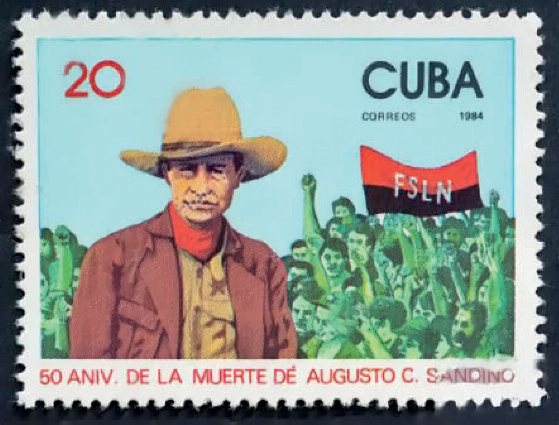
A stamp was printed in Cuba.
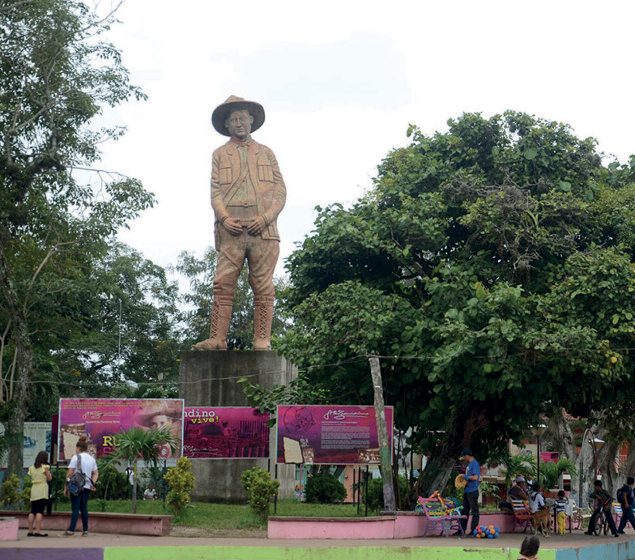
A monument honoring A.C. Sandino in the north of Nicaragua.
Also, Pablo Neruda, a Chilean writer, poet, politician, Nobel laureate, honored in his world-famous "Canto
General" (Great Song) the historical merits of A.C. Sandino in the fight for the freedom and dignity of the
people.
Museum "Augusto César Sandino" in Managua.
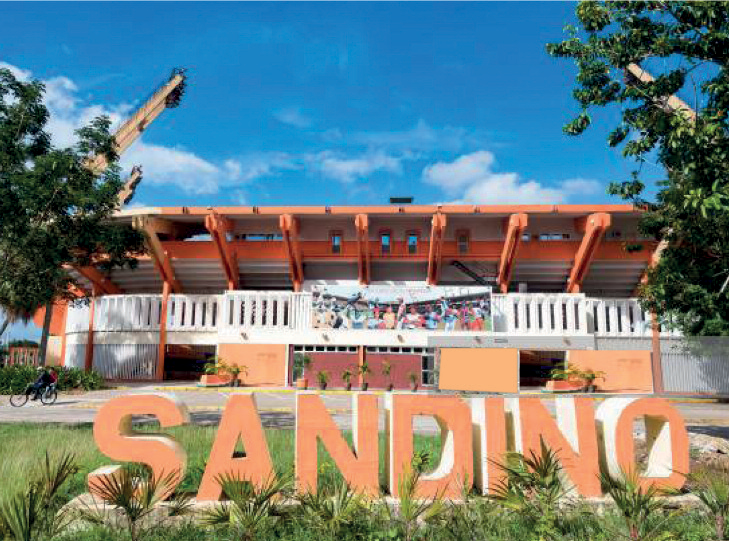
Baseball Stadium "Augusto César Sandino" in Santa Clara, Cuba.
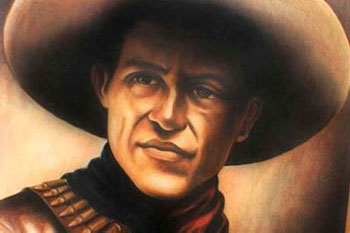
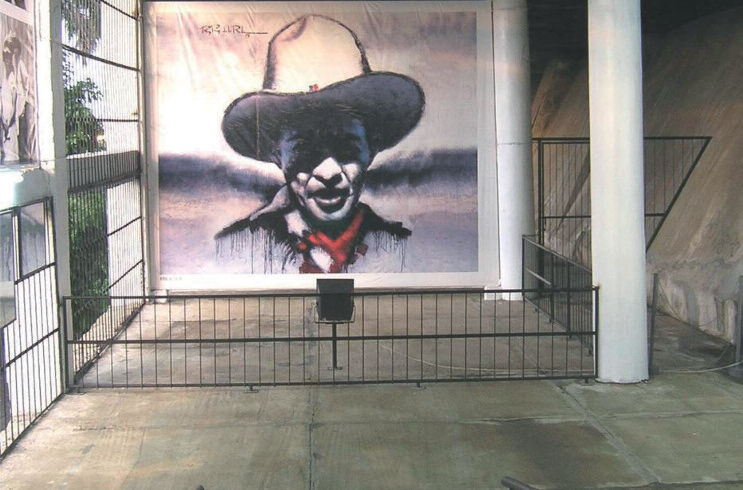
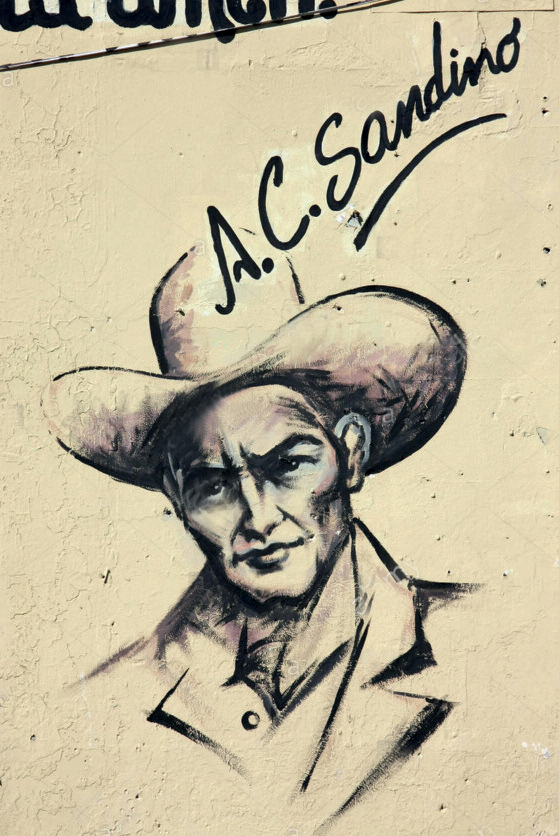
There are paintings and drawings of Sandino.
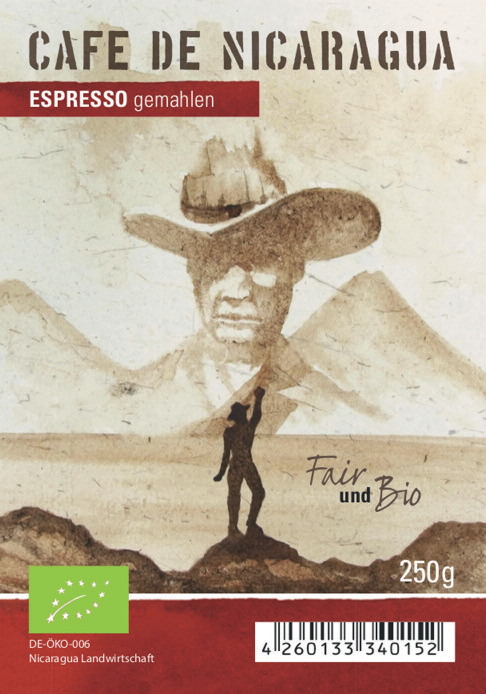
Nicaragua exports "Sandino Coffee" to many countries.
Since 1979, the international airport in Managua, Nicaragua, has been named "Augusto César Sandino." In
Berlin Lichtenberg, there is a Sandino and a Simón Bolívar Street. Simón Bolívar was also a freedom fighter
in Latin America. He lived about 100 years before Sandino, from 1783 to 1830. He was 47 years old.
May 2022, initiative for the preservation of the Nicaragua gable-wall paintings at the Cultural Ring in
Berlin e.V., Christel Schemel, a member of the support association of the Wilhelmsberg Elementary School,
Sandinostr. 8, 13055 Berlin.
|


 address: